Irrigation drip system
1344×768 · AVIF · CC BY 4.0
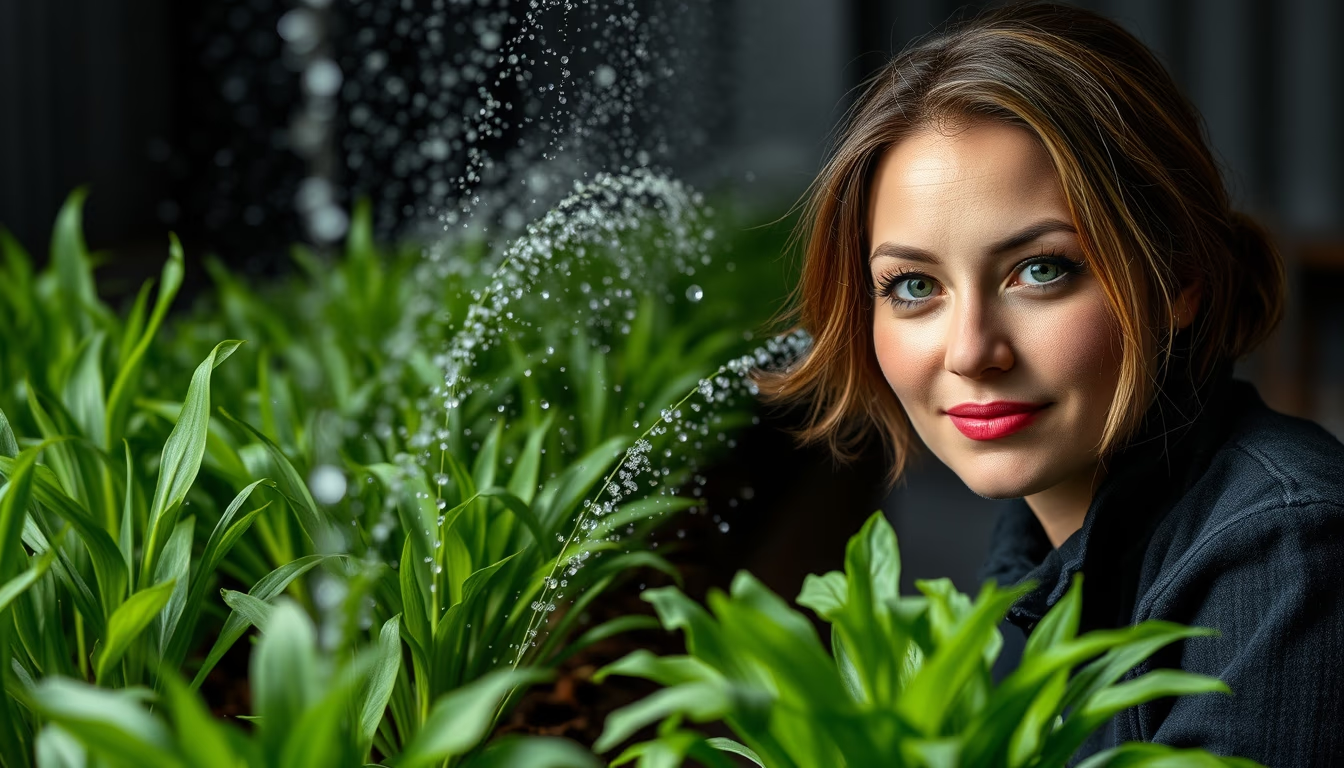
Sistema de irrigação por gotejamento: economia de água e aumento de produtividade agrícola.
Sobre o tema
Drip irrigation is a micro-irrigation system that delivers water directly to the root zone of plants through a network of tubes, emitters, and valves. Unlike conventional sprinkler systems that spray water over large areas, drip irrigation applies water slowly and precisely, minimizing evaporation and runoff. This method can reduce water usage by 30 to 50 percent compared to traditional flood irrigation, while potentially increasing crop yields by 20 to 90 percent, depending on the crop and local conditions.
Developed in Israel in the 1960s by Simcha Blass and his son Yeshayahu, drip irrigation revolutionized arid agriculture. The technology spread rapidly to water-scarce regions around the world, including Brazil's semi-arid Northeast (Sertão), where it is used for fruits like melon, grape, and mango. In Brazil, drip irrigation is also common in coffee, sugarcane, and vegetable production, especially in states like São Paulo, Minas Gerais, and Bahia.
The system requires careful design to avoid clogging of emitters by sediment or mineral deposits. Modern systems often include filtration units and pressure regulators. A typical drip irrigation setup operates at low pressure (1 to 2 bars) and can be automated with timers and soil moisture sensors, allowing precise control over watering schedules. This not only conserves water but also reduces labor and energy costs.
A key advantage of drip irrigation is its ability to deliver fertilizers directly to the roots through fertigation, enhancing nutrient uptake and reducing fertilizer waste. However, initial installation costs can be higher than other irrigation methods, though long-term savings often offset the investment. In many regions, government subsidies and technical assistance programs have promoted adoption among smallholders.
Perguntas frequentes
Como funciona a irrigação por gotejamento?
A irrigação por gotejamento utiliza tubos e emissores que liberam água gota a gota diretamente na zona radicular das plantas. O sistema opera em baixa pressão e pode ser automatizado com temporizadores e sensores de umidade do solo.
Quais são as principais vantagens desse sistema?
Economia de água de 30 a 50%, aumento de produtividade, redução de ervas daninhas, menor incidência de doenças foliares e possibilidade de fertirrigação (aplicação de fertilizantes junto com a água).
Onde a irrigação por gotejamento é mais utilizada no Brasil?
É amplamente empregada no semiárido nordestino para frutas como melão, uva e manga, além de culturas como café, cana-de-açúcar e hortaliças nos estados de São Paulo, Minas Gerais e Bahia.
URL direta
https://pub-c7d6a6ea828543ac903a74a341ccb2e1.r2.dev/imagens/irrigation-drip-system-studio-editorial-portrait-p2.avifComo creditar
Inclua um link visível de volta pro UtilizAí. Copie um dos snippets abaixo:
<a href="https://xn--utiliza-eza.com/midia/imagens/irrigation-drip-system-studio-editorial-portrait-p2">Irrigation drip system</a> by <a href="https://xn--utiliza-eza.com">UtilizAí</a>, licensed under <a href="https://creativecommons.org/licenses/by/4.0/">CC BY 4.0</a>.
[Irrigation drip system](https://xn--utiliza-eza.com/midia/imagens/irrigation-drip-system-studio-editorial-portrait-p2) by [UtilizAí](https://xn--utiliza-eza.com), CC BY 4.0
Licença: CC-BY-4.0